
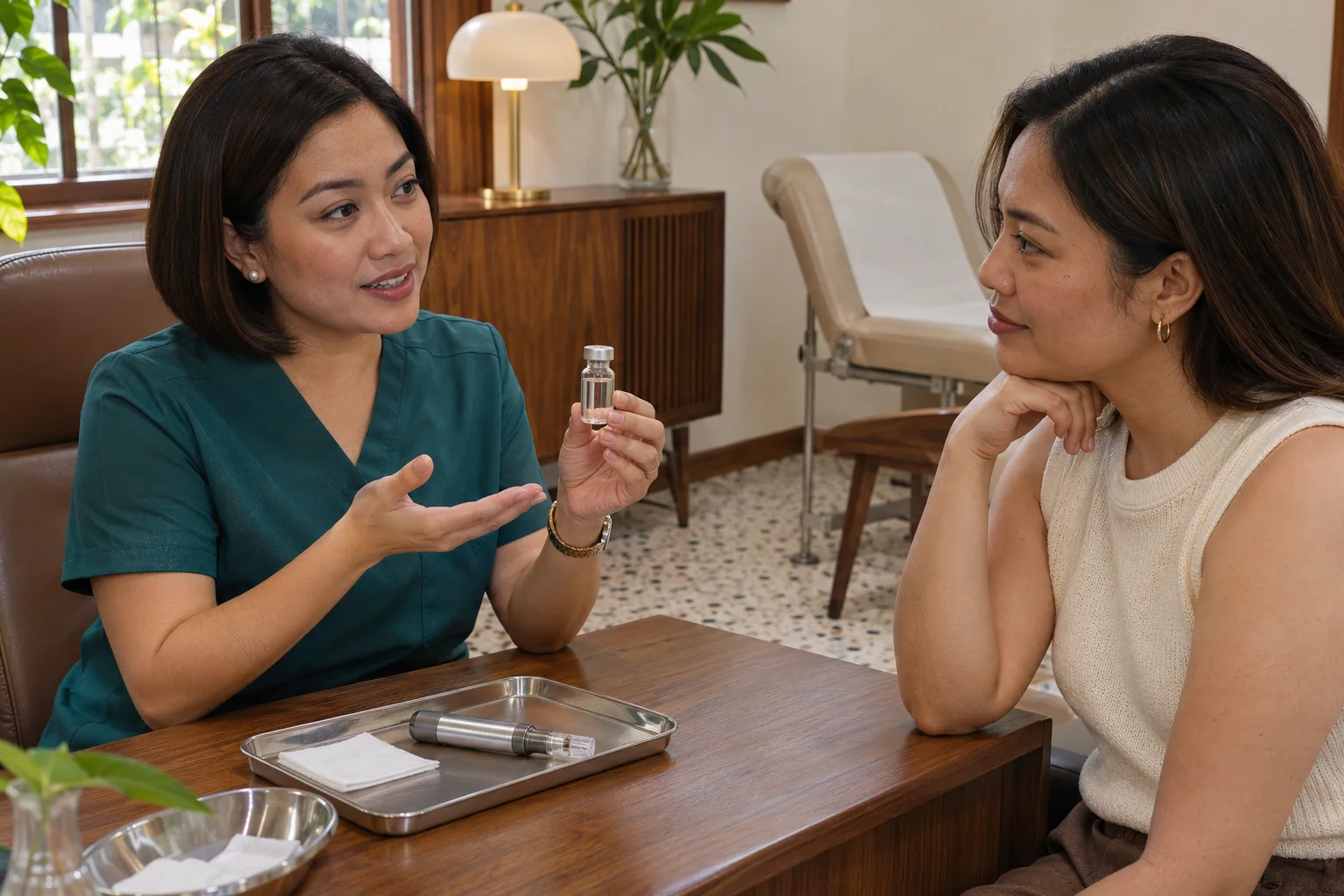
If you have only heard "PDRN" in passing, the question is fair: what is this ingredient actually supposed to do once it is in the skin? Here is a plain answer.
What PDRN does, in brief
The answer is about cell signaling. The northbiomedical.com article on Rejuran puts it this way: The fragments engage a cellular pathway — the adenosine A2A receptor — that prompts fibroblasts to ramp up activity, while a second “salvage pathway” supplies raw nucleotides that cells can reuse to repair and build.
In everyday words, that means two jobs. One nudges the skin's builder cells to work harder, and the other hands those cells reusable parts.
What the research reads like so far
Do not expect a promise of a specific look. The published work asks narrower questions. A Dermatology Times report on polynucleotide therapy in scar and burn management covers one corner of it, and a real-life assessment of injectable polynucleotides for skin rejuvenation looks at another. A prospective observational study of polynucleotide injections for periorbital rhytides narrows it to the skin around the eyes.
Each of those is a separate question with its own setting. Read them one at a time instead of treating them as a single verdict.
The cheap first step, and what is not a home project
Reading costs nothing. Open the three sources above, write down any term that confuses you, and bring that list to a visit. A list like that makes a first conversation shorter and clearer.
Polynucleotide injections are not a do-it-yourself matter. Skip the temptation to shop for products or syringes online on the strength of a pathway diagram. The injection side belongs with a licensed clinician.
Put your question to a licensed clinician
You do not need a medical vocabulary to ask well. "What is this meant to do in my skin, and what does the evidence say for my concern?" is a complete question. Readers around Hackettstown who are new to all this should feel free to ask it plainly. A good clinician will answer it plainly too.